
Table of Contents
Introduction
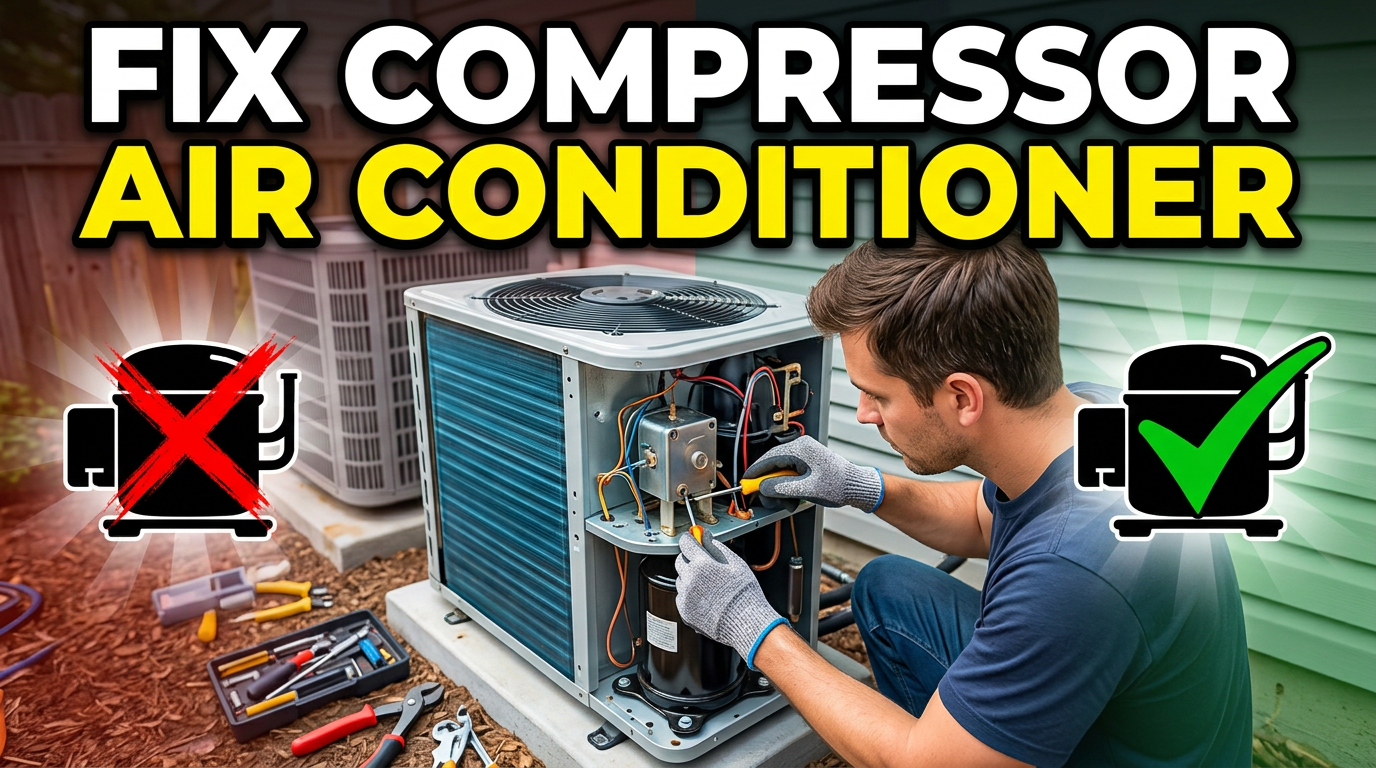
I know if you’re reading this article, it’s because you’re looking for ways to fix compressor air conditioner problems. But before doing anything, please be careful. I strongly recommend contacting a qualified HVAC technician because working on an air conditioner compressor can involve electrical hazards and refrigerant-related risks.
Many homeowners panic when their AC suddenly stops cooling and immediately assume the compressor has failed. However, several other issues can produce similar symptoms.
In this guide, I’ll show you safe troubleshooting steps you can perform yourself before deciding whether professional repair is necessary.
What Causes Compressor Problems?
Several issues can affect an air conditioner compressor.
Common causes include:
- Dirty air filters.
- Power supply problems.
- Tripped circuit breakers.
- Faulty capacitors.
- Overheating.
- Low refrigerant levels.
- Age-related wear.
- Dirty outdoor condenser coils.
In some situations, the compressor itself is not actually damaged.
How to Fix Compressor Air Conditioner Problems (Step-by-Step)
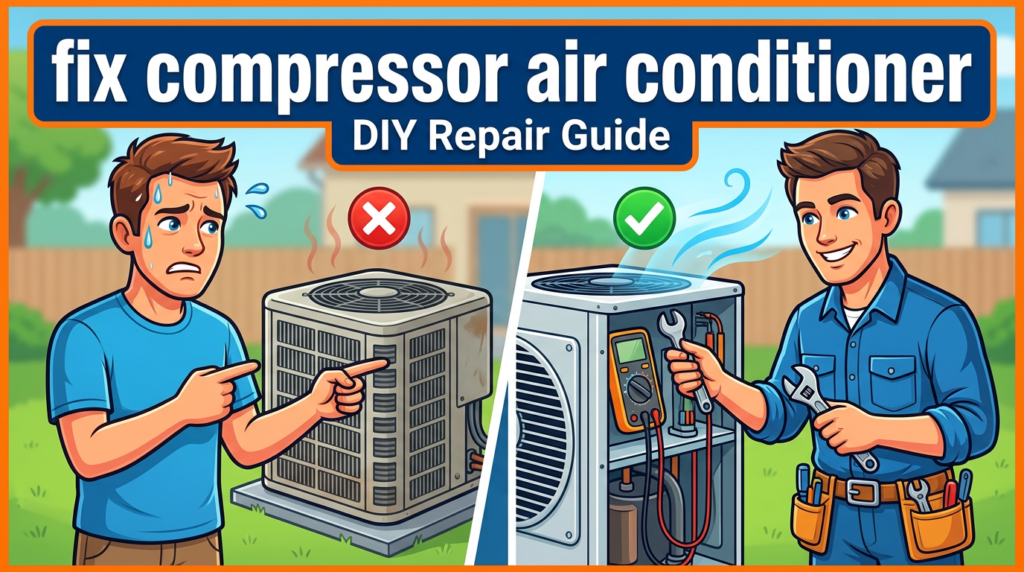
Step 1: Turn Off the Air Conditioner
Safety comes first.
Turn off the AC system before inspecting anything.
This prevents additional damage and reduces electrical risks.
Step 2: Check the Thermostat Settings
Sometimes the thermostat is responsible rather than the compressor.
Make sure:
- Cooling mode is selected.
- The temperature is set correctly.
- The batteries are not dead.
Many homeowners discover that incorrect thermostat settings caused the problem.
Step 3: Inspect the Air Filter
A clogged filter can restrict airflow and make the system overheat.
Remove the filter and inspect it.
If it looks dirty, replace it with a clean one.
Step 4: Check the Circuit Breaker
A tripped breaker can prevent the outdoor unit from operating.
Locate your electrical panel.
If the breaker has tripped, reset it once and test the system again.
If it trips repeatedly, stop troubleshooting and contact a technician.
Step 5: Clean Around the Outdoor Unit
Leaves, dust, and debris can reduce airflow.
Remove visible debris around the condenser unit.
Keep at least a few feet of open space around it.
Step 6: Listen for Unusual Sounds
Grinding, clicking, or loud buzzing noises may indicate internal compressor problems.
If you hear abnormal sounds, avoid continuing to run the system.
Professional inspection is recommended.
Step 7: Allow the System to Cool Down
Overheating can temporarily shut down the compressor.
Turn off the system and wait for some time before restarting it.
In some cases, the unit may resume normal operation after cooling.
Additional Solutions
Replace Dirty Filters Regularly
Regular maintenance helps reduce stress on the compressor.
Schedule Annual Maintenance
Preventive inspections can identify problems before they become expensive repairs.
Inspect the Outdoor Unit Frequently
Keeping the condenser clean improves efficiency.
Replace an Old System When Necessary
Older compressors may eventually reach the end of their service life.
Common Mistakes to Avoid
- Ignoring dirty air filters.
- Running the AC continuously despite unusual noises.
- Resetting breakers repeatedly.
- Blocking airflow around the outdoor unit.
- Assuming the compressor is always the problem.
- Attempting electrical or refrigerant repairs without proper training.
Frequently Asked Questions
Why is my air conditioner compressor not working?
Power problems, overheating, dirty filters, and worn components are common causes.
Can I repair the compressor myself?
Basic inspections are possible, but internal compressor repairs should usually be handled by trained professionals.
How do I know if the compressor is bad?
Symptoms may include warm air, unusual noises, or the outdoor unit failing to start.
Is replacing a compressor expensive?
Compressor replacement can be costly depending on the AC model and age.
Can regular maintenance prevent compressor problems?
Yes. Proper maintenance helps improve efficiency and extend the life of the system.
Conclusion
Trying to fix compressor air conditioner issues can be stressful, especially during hot weather. Fortunately, many problems are caused by simple issues such as dirty filters, thermostat settings, or power interruptions.
However, because compressors involve electrical components and refrigerant systems, serious repairs should be left to experienced HVAC technicians.
Once you follow these basic checks, you should have a better idea whether the problem is simple or whether professional service is needed.